
Up to four more clubs are set to be included in Football Australia’s National Second Tier (NST) when the planned competition kicks off in 2025.
James Johnson, CEO of Football Australia, fronted the media early in the week to announce that the initial selection process had yielded eight successful applicants and that a second selection process will be held in early 2024 to add up to four more teams to the competition.
Since the initial announcement, multiple clubs have released official statements or commented to the media to explain where they stand. These contributions to the public discourse have helped reveal the internal politics of the NST and have fueled speculation about what the competition could look like.
The Queensland Conundrum
Following the initial announcement, Sunshine Coast FC where quick to release a statement confirming their intent to join the competition when it kicks off in 2025. Regarding their initial exclusion, the statement noted it is “well documented that the club have unresolved matters that will be brought to a conclusion in due course”. These unresolved matters allegedly relate to conduct from Football Queensland, who have allegedly worked against clubs that applied for the NST. These allegations were fueled by Football Queensland’s alleged threat to expel Sunshine Coast Fire from State competitions, soon after the club announced it had applied for the NST.
Brisbane United also released a statement signaling their intention to join the competition in 2025. Regarding their exclusion from the foundation group, the statement noted “significant risks to a successful entry and sustainable future in the NST”. Brisbane United is comprised of multiple member clubs and must fairly allocate NST financial risks across its stakeholders. The member club construct also poses regulatory questions for governing bodies who must decide how to manage one club that is actually comprised of multiple clubs.
Gold Coast United also released a statement signaling their intent to join the competition. This came as a surprise to many as the club was not considered a top candidate in the online discourse leading up to the announcement. There were no issues or concerns raised by the club in their statement though, with the club opting rather to reiterate the importance of their bid to the region. This could imply that the club may need refine its bid to win over Football Australia’s approval.
Once Burned Twice Shy
Two former National Soccer League clubs from Victoria have issued statements regarding their exclusion from the NST following Football Australia’s announcement.
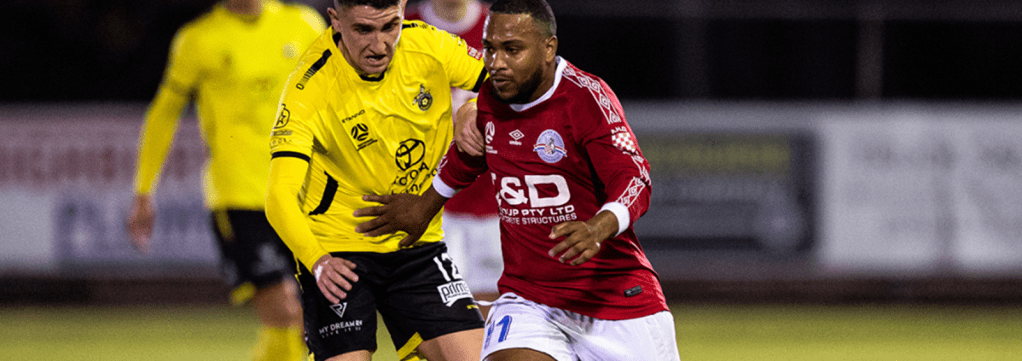
Melbourne Knights released a statement that welcomed the announcement, although explained that they identified a number of concerns during the Request for Proposal (RFP) phase of the bidding process which led them to decide that at the current point in time the club did not believe it was in their best interest to participate in the NST. The statement did however indicate the club was currently engaging with Football Australia to address the identified issues and seek a place in the NST for 2025. During the week, Pave Jusup, the former President of the Melbourne Knights explained a number of his concerns over twitter, including the intention to hold the competition in the winter rather than the summer and lack of clarity regarding operating costs. He has also voiced concerns about NST reserve teams and where they will play once senior teams exit their state competitions.
Heidelberg United released a statement confirming that although supportive of the competition, they did not ultimately submit a finalised bid, citing concerns identified at the RFP phase of the bidding process and noting that the financial viability of the club was a priority. It is believed the increased operational costs involved with the NST may be too much for the club to take on at this point it time.
Opportunities for Unrepresented Regions
South Hobart issued a statement in support of the NST and indicated their intention to engage Football Australia and ultimately enter the competition. The South Hobart statement indicated their bid was supported by a wide variety of stakeholders including State members of parliament, Federal members of parliament as well as soccer clubs and associations from across the state. The club is waiting for further feedback from Football Australia and is open to refining their bid to support their entry into the NST. It is understood the club is facing challenges locating an appropriate facility with upgrades needed to their current home ground or another location required to participate.
An article from the Canberra Times addressed the positions of the territory’s two bids. Canberra United and Gungahlin United have both been reported to be interested in pursuing acceptance into the NST and will meet with Football Australia in the coming weeks to discuss their bids. The news outlet also reported that “large operational costs of participating were a sticking point for a lot of the clubs who didn’t make the final eight.” It is noted that the APL is currently seeking investment for an A-League club in the region which at the current time has no professional men’s football teams.
The Other Clubs
Of the 26 clubs which entered the RFP phase, 10 of them are yet to release public statements. The second selection process offers these clubs the opportunity to reapply for the NST, however it is understood that many of these silent clubs were unable to put forward compelling bids.
- Some of these clubs remain in lower divisions (Brunswick Juventus FC, Fraser Park FC).
- Some of these clubs represent smaller fan bases comparted to their state’s other potential applicants (Sutherland Sharks FC, Fraser Park FC, Green Gully).
- Some have not previously shown national ambitions (Gold Coast Knights, Olympic FC).
However, questions remain about a few of these silent clubs, and the football public would welcome statements to better understand these clubs’ NST perspectives and ambitions.
- Adelaide City has yet to release a statement. It is a historic former NSL club and one of the best known football entities in South Australia. Their exclusion brings into question the club’s financial abilities and ambitions.
- Football South Australia has yet to release a statement. Its bid came as a surprise to many and was clouded with uncertainty. The football public would be interested to understand why the Federation felt the need to put the bid together and how it was envisioning the bid would operate.
- Brisbane City has yet to release a statement. It is another former NSL club which previously bid for a spot in the A-League. Its bid and subsequent exclusion begs questions about its A-League ambitions. Also of note is that the club’s former President and Chair of its A-League bid is Robert Cavallucci, who is currently the CEO of Football Queensland. The A-League has separately indicated it could be open to a second Brisbane club.
Whether Football Australia is open to new bids from entities that did not participate in the first selection process is unknown, however a number of significant Australian football clubs have not participated up to this point, including Lions FC, West Adelaide FC, and Perth SC.

The delayed kick-off was inevitable for Football Australia to address the revealed challenges
The delayed competition kick off (from 2024 to 2025) appears to have been forced on Football Australia following the emergence of a number of issues including club preparedness and stakeholder roadblocks.
The Federation must now select up to four more teams, navigating club concerns about finances, operational costs and balancing expectations against benchmarks set by the foundation group.
The Federation must address geographical footprint concerns raised by the football public after only Victorian and New South Wales clubs featured in the initial announcement.
The Federation must deal with State Federations to ensure that NST clubs can field junior and reserve teams in appropriate competitions, noting that A-League clubs faced similar challenges, launching themselves without Youth academies and taking years to establish junior infrastructure.
The Federation must deal with State Federations who refuse to support a path to promotion and relegation. It has been indicated that clubs relegated or exiting the NST may have to re-enter state competitions at the the bottom of state pyramids rather than dropping to the next lowest level, the State NPL. This is similar to how inaugural NSL club Mooroolbark was relegated to Victorian Metropolitan League Division 2 rather than to the top State League after its exit from the NSL.
The launch of the NST has proven to be a significant challenge. It has revealed a number of previously unknown concerns from conflicted stakeholders. With any hope, the 2025 launch will be a success, the conversations and stakeholder management is conducted in good faith, and the implementation of the league will help better align all stakeholders in Australian Football.


 The Beautiful Game