
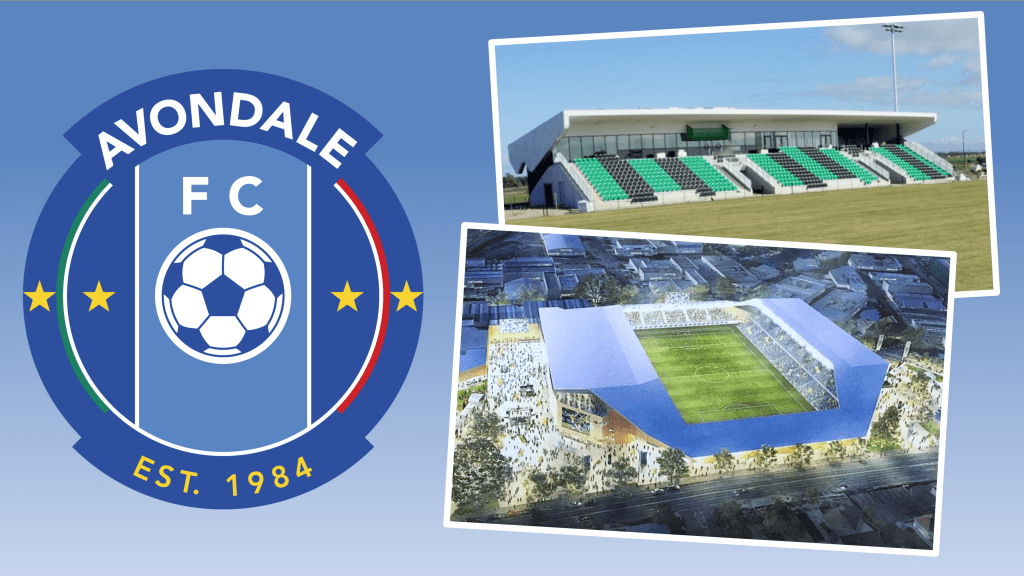
When Football Australia (FA) announced the National Second Tier (NST) foundation clubs, few people questioned the on-field and off-field credentials of the cohort – with the exception of Avondale FC. Avondale represented the only foundation club without a history in the National Soccer League, the only foundation club without a significant supporter base, and most notably – the only foundation club without access to a suitable venue to play their home games.
Despite these challenges though, Avondale has been able to secure foundation club status from the FA and may come to represent an example of how the NST construct can assist facility development. With promotion and relegation between the NST and State Leagues supposedly in the works, Avondale may prove in the long term not to be the exception of the NST, but rather, the standard.

The Avondale stadium solution
As part of the NST application process, clubs needed to meet criteria set by the FA, which are understood to include access to an appropriate facility. The club’s meteoric rise has seen the senior men’s side promoted five times in six seasons, with the club now boasting the title of Champions of Victoria, however their facility development has not kept up with their on-field success.
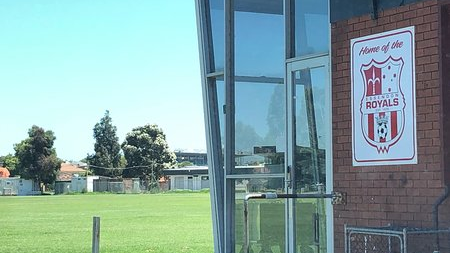
The club contested the 2015 NPL season at their local ground, Avondale Heights Reserve (complete with temporary grandstand) before moving to Knights Stadium 2016. In 2018 Avondale found a new home ground after securing an facility agreement with the Reggio Calabria club. This granted them exclusive access to a ground and once again, a temporary grand stand. Avondale have consistently attracted criticism for their substandard facilities but have managed to continue to host State Level matches at the Reggio Calabria club. Their existing home ground however has been deemed unsuitable for national competition, which has forced the club to play elsewhere for Australia Cup Matches.
Avondale’s acceptance into the NST though suggests that this situation is about to change, and that the club has secured a facility appropriate for national competition (assuming the FA are applying strict facility standards). This has fueled rumors online about club’s facility plans, including suggestions of a new stadium in Maribyrnong, a ground sharing agreement with Western United, and even a merger with Brunswick Juventus. Whatever the ultimate outcome though, the Avondale stadium situation, and its rumored solutions, show how the NST can drive facility development.

The NST will Empower clubs to develop facilities
Existing State Facility Standards have allowed come clubs like Avondale to operate in substandard facilities which may have insufficient undercover seating, no corporate facilities and even no fencing. This has capped club professionalism and in some cases even prevented clubs from selling tickets to home games. The potential introduction of the NST increases the revenue requirements for clubs and necessitates operational and facility development.
This necessity has required Avondale to secure an improved facility, but it has also incentivised Preston Lions to secure investment for a new grand stand and APIA to secure access to Leichhardt Oval. These projects aim to increase the clubs’ financial capacity and professionalism, and go to show how potential NST participation is already driving facility development.
By creating access points to the NST via expansion or promotion, the FA can unleash this incentive dynamic across the country, including the other 18 NST applicant clubs who did not yet meet the necessary on-field and off-field benchmarks. Future entry allows potential clubs to develop long term facility plans and present more compelling cases to Council to unlock investment. There is evidence that this potential growth is already being factored into long term club planning, including at Brisbane United which has made political connections in support of the Perry Park redevelopment and at Heidelberg United which is developing long term facility plans, both on the basis of potential NST participation.
The most compelling aspect of this incentive dynamic though is how it aligns stakeholders behind the FA. By providing the incentive of NST participation alongside Facility Standards the FA can essentially make clubs do its work. Individual clubs will unlock council and private investment in line with the FA’s strategy for the collective benefit of Football in this country.

State Federations can also be aligned behind NST Facility Standards
NST Facility Standards also offer the FA a chance to capstone facility development nationally and align divergent State strategies. The current football ecosystem sees each State Federation manage their own facilities to a different set of standards as exemplified by each of the State Football Centers (SFC).
SFCs provide critical professional capacity. This includes The Victorian SFC which hosts Melbourne Victory Women’s matches, the South Australian SFC which hosts major Adelaide City FC Matches, and the Northern Territory SFC which allows the state to host Australia Cup games to broadcast standards. Unfortunately differences in State Standards have resulted in some unsatisfactory outcomes. This includes the Tasmanian SFC which is not up to broadcast standards, forcing some Australia Cup games to be hosted in Cricket Stadiums, and the non-existence of a Western Australian SFC which contributed to Perth Glory’s facility struggles when their home ground was being renovated. Most notably the Queensland SFC (which unlike Victoria) is not able to host A-League Women’s games and forces the Brisbane Roar to play at a facility managed by Rugby Union.
By building on the lessons learnt about national second tier infrastructure through the Australia Cup and A-League Women Competitions, the NST Facility Standards can become a a national reference point for future professional football facilities and will help to align different State Facility Outcomes. This will have the effect of ensuring critical professional capacity which can be utilised by potential NST clubs and also by teams in the ALW (Victory), ALM (Glory) and Australia Cup (Hobart).

NST Standards allow the FA to shape football facilities in a way other national efforts can’t
Facilities standards can far ranging implications to the on-field and off-field football product. They can influence broadcasting (which is why Melbourne City are taking their ACL match to Princess Park), fan engagement (forcing Brisbane Roar to leave Redcliffe) and finances (high rent nearly forced Perth to play out of a Hockey Stadium). Unfortunately A-League clubs have a number of disadvantages as facility trailblazers.
- Firstly the professional product A-League clubs are offering can only be provided by centrally located top-tier facilities. These are often managed by State Governments, come at a high cost and leave A-League clubs little negotiating leverage.
- Secondly even training facilities have show how land access is notoriously difficult to secure (as demonstrated by Melbourne Victory’s attempts at Footscray Park) which forces teams to be nomadic, and unable to foster strong healthy fan cultures
- Thirdly many facility arrangements are shared with other codes (like Brisbane Roar) which creates scheduling and ground quality issues
- Fourthly, the most accessible facility opportunities are based in the outer suburbs (such as Melbourne City) which aren’t conducive to broad A-League club catchments.
- Finally, even when training facilities are secured they are often just that, with most A-League clubs unable to host even ALW or ALM games out of their grounds (such as Sydney FC’s Sky Park).
The A-League clubs have made some impressive headway in football facilities (including Western Sydney and Adelaide United) however after 20 years many clubs’ struggles are proving that they are uniquely disadvantaged in this area. Although A-League clubs continue to have a role to play, (especially in stadium lobbying efforts such as Perry Park) the NST offers key strategic levers the FA can pull for the whole of football.
- NST Facilities will mostly address second tier professional facilities which have proven to be the most flexible, with the ability to host Community Events, some A-Leagues Games and International Squad Training.
- NST Facility development will help realize the improvement of existing facilities in central locations offering a great cost-benefit tradeoff.
- NST Facilities are likely to be managed and operated by clubs or federations which puts football first and avoids the issues which come with sharing grounds.
These powerful characteristics mean the NST facility development, when guided by informed FA facility standards, can offer a realistic opportunity to make a big impact of Australia’s football culture, resulting in professional facilities developed by multiple aligned stakeholders across a large national footprint.
What now for Avondale?
Each of the Avondale rumors exemplifies the benefits of NST incentivized facility development. A new stadium in Maribyrnong would unlock council investment from a council allegedly hostile towards soccer (example 1, example 2, example 3). A sharing arrangement with Western United will demonstrate the flexibility of football managed second tier facilities. A merger with Brunswick Juventus will create a bigger club and support investment in CB Smith Reserve. However for now the Avondale stadium rumours are just that, rumours.
For all the espoused benefits at the FA’s finger tips, the key power of NST Facility Standards and their incentive dynamics lie in the FA’s ability to develop and apply them. For now Avondale is expected to play their upcoming NPL season in the substandard Regio Calabria club.


 The Beautiful Game
