
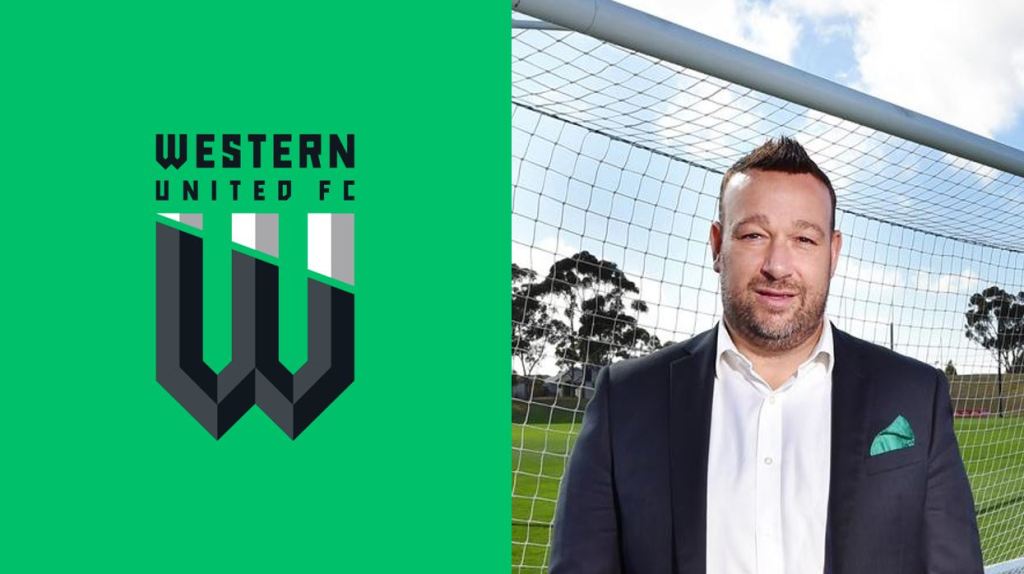
In 2018 the Western Melbourne Group bid for a spot in the A-League. Soon after, their team Western United were awarded a licence to participate in the competition.
The project was conceived by Steve Horvat who brought together key stakeholders including Football Agent Lou Sticca, KPMG Partner Maurice Bisetto, Local Council The City of Wyndhum to form the foundation of the bid.
The project, and initial licence fee was initially funded by Birmingham Sports Holdings, however following a speculated decline in the Australian property market the firm pulled out their funding from the club.
In 2019 the club joined the A-League competition. It was also revealed that the owners of the club were primarily Jaszac Investment Group (an Investment Firm led by Jason Sourasis) as well as Resimax (a Property Development Company of Aziz Kheir)
In 2023 the AFR reported that Jaszac alone were the primary leads in the Western Melbourne Group. It is understood that the Western Melbourne Group also comprises a number for smaller investors.
Insights.
Much has been written about the Western United model. The club (Western United, WU) and stadium development (via Western Melbourne Group WMG) are intertwined discussions about ownership must consider such.
Firstly, it appears that although WMG own WU, they may not be the sole owners of WU. It is possible that WU may have some other shareholders whose interest is limited to the football operations. If so, it is likely that the original football advisory group, including Steve Horvat may sit in this camp.
Secondly, the WMG ownership is closely linked to Property Development and the Wyndham City Council relationship. The Public Private Partnership (PPP) originally set up between the Council and WMG is the sole source of intrinsic value for the club, and a powerful local stakeholder. The Council has granted training facilities for WU to use, and boasts a supportive relationship with the club.
The PPP grants WMG free land to develop houses and commercial properties, which it is intending to sell to fund and build its much touted Stadium. As such the property development is the most investible component of the arrangement, but the arrangement requires WU to provide the Council social licence to have made the deal. This means the WMG must continue to support WU, at least until the property development is completed.
For now through WMG has been sourcing funds from different parties to get its construction off the ground, first it appears to have been the Birmingham Sports Holdings, now it appears to be Jaszac Investment Group. WMG has continually sourced need capital by bringing in new minor stakeholders as well as funding partners such as Johnson Controls.
The project is mooted to boast $2 billion of value and is perfectly aligned with the major stakeholders. For the Council the Property Project will bring Investment to the area, homes, jobs, potentially State Funding for improved infrastructure – at the cost of the free land they gave up. For the owners of WMG the property project will bring potentially hundreds of millions of dollars of profit. For WU the Property Project will bring a Stadium, a community of potential fans and potentially be able to fund the club if WMG chooses to funnel the property profits into WU.
One point of disappointment for the wider football community though is the timelines on the stadium. WU was granted a licence off of assurances the project would be completed in a few years, now six years after being granted a licence, little construction has started at all and there is a chance the project may never materialise.
It has to be said though that the upside of the project is huge, and as long as this fact remains, WMG will continue to attract capital to keep Western United afloat, and develop their property plans. Their pockets are so deep in fact that the WMG have stepped to support the ownerless Newcastle Jets.
Limitations and considerations
Information has been accumulated based on publicly available reports and may not be entirely correct.


 The Beautiful Game