
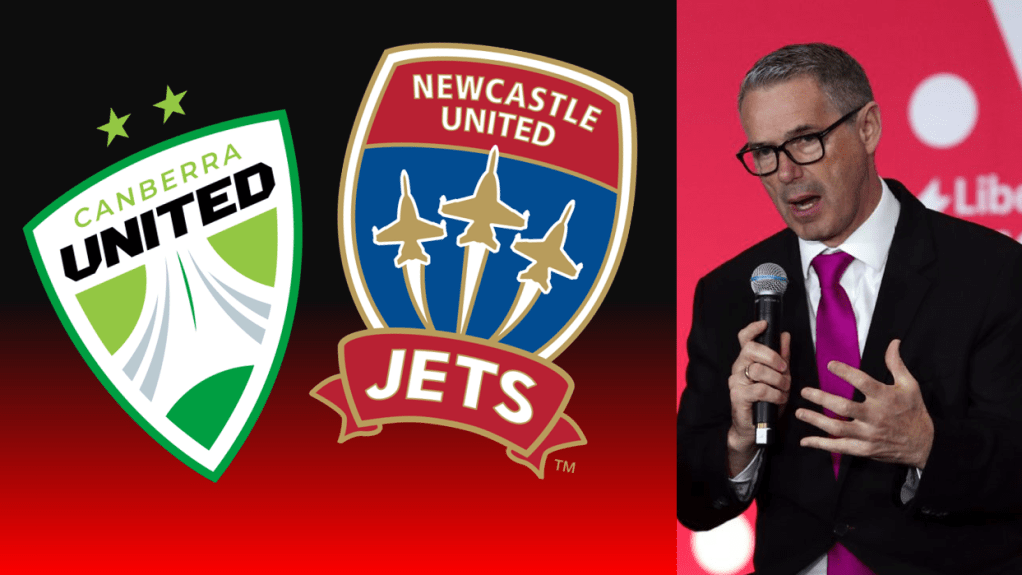
APL Boss Stephen Conroy has told media the APL is unable to secure club finances going forward, and warned both Canberra and Newcastle stakeholders that their clubs are not assured of competition places next season.
Since their previous owner was stripped of the competition licence, Newcastle has been owned by four competing clubs (Wanderers, Sydney, Western and supposedly Melbourne City). The consortium has not been able to offload the club to a new owner which is putting Newcastle’s future in peril.
12 or 14 team A-League?
Canberra on the other hand is potentially in the firing line with the women’s team facing an uncertain future unless a purchaser of the men’s licence can be secured.
The media comments are no doubt a warning shot fired by the APL who is struggling to get interested parties over the line in both deals. Negotiations for the Newcastle licence were reported have collapsed this week, while Canberra negotiations have been stuck in final stages for many months now.
It must be highlighted that some believe the APL comments are warning shots to stakeholders to get a move on and may result in stronger ownerships results for both Newcastle and Canberra.
With Auckland now confirmed as entering the competition next year, the failure to secure the at risk clubs could see the A-League Men competition stay as a 12 team competition.
National Second Division?
With the National Second Division scheduled to get underway in 2025 though some interesting opportunities may emerge. Previously clubs existing the A-League met either a final demise (New Zealand Knights) or struggled to carve out State League operations from square one (Gold Coast United).
The NSD may offer Newcastle a national platform to cushion a fall from the A-League’s high financial benchmarks, as well as an opportunity for another Canberra club to provide the region National representation.
Tough Market
A tough financial market is having wide ranging impacts. The A-League like all sports leagues are suffering in attendances (hit by a cost of living crisis), sponsorship (as profitability wanes), and broadcasting (Network 10 is rumoured to be offloaded by Paramount in mass cost cutting).
Rugby Union is suffering worse than the A-League with the Melbourne Rebels looking at a potential demise while other sports are getting creative to realise value.
The AFL’s has been forced to tap into its final safety net by launching its Tasmania team (which has already hit 75k foundation members) in some ways represents the AFL’s desperation to grow league value at the cost of an uneven competition.
The NRL has been forced to seek growth opportunities in Las Vegas and potentially PNG. Meanwhile as the economy tightens, desperate lobbying efforts for stadium funding in Queensland and Tasmanian are seeking assurances before the government wallets close.
A-League opportunity
The bottom line is the A-League is not the only league struggling at the moment, and even other competition growth activities can also be seen through the lens of defensive moves.
The A-League itself announced All-Stars tours sure to bolster the APL’s coffers, but unlike the other leagues, its clubs is also able to benefit from the additional resilience of a global transfer market and the upcoming NSD.
If nothing else, the APL announcement draws a line in the sand, clubs will have to look after themselves going forward and the league will protect the league’s interest. It is a sign to all stakeholders to build their own resilience.


 The Beautiful Game