
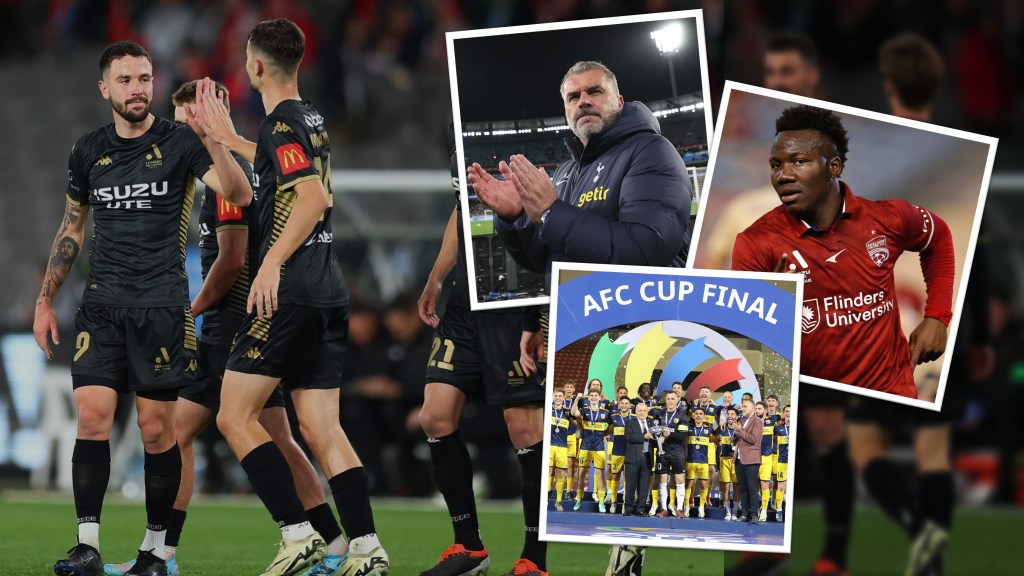
The A-League can realise massive benefits by improving its international engagement. Improved transfer opportunities for players, increased commercial revenues for the clubs, and more meaningful continental games for fans are just some of the possibilities on offer. Unfortunately though, the conversation about international engagement has been largely ignored in recent times as domestic challenges continue to dominate A-League conversations.
A quick assessment of the A-League’s opportunity though demonstrates the importance of international engagement, and suggests that football stakeholders must once again turn their attention to growing the A-League outside of Australia.

The A-League has an international platform to grow from
The A-League currently has a massive current international footprint. It has been broadcast on the television networks of over 170 countries and where a broadcast deal is not already secured, games are streamed live on YouTube. This significant global reach offers the A-League a massive platform for growth.
The A-League also has the benefit of an extensive global player and club network. After twenty years of competition many ex-A-League personnel find themselves at major clubs (Joe Gauci at Aston Villa), many international personnel find themselves in the A-League (Slovakian International Robert Mak) and many clubs have made positive international impressions (Western Sydney Wanderers ACL winners). Dozens of instances of this cross pollination have earnt the A-League mental space in the collective consciousness of football fans globally. This natural entry point offers the A-League a platform for further growth.
The A-League offers natural unique selling points to international fans
One of the most interesting feature of the competition broadcast is its unique time zone for international markets. In the Americas, A-League games kick-off in the morning. In Europe and Africa, A-League games kick off around midday. This means the A-League offers live football content in key markets at times where few other alternatives are available.
In Asia, A-League kick off times alone may not provide a point of difference however the competition is more relevant to Asian football fans. A-League matches offer Asian fans an opportunity to assess rival clubs (AFC Cup winners Central Coast) and to view possible transfer prospects as it is very common for A-League players to transfer over to other Asian clubs.

The A-League presents an attractive broadcast product
The A-League is also notable for its high quality football. The A-League is often ranked in the top 30 competitions by some statistics aggregators and the more evidence supports this high quality assessment. A-League clubs have increased their outgoing transfers to major leagues (including to clubs like Bayern Munich) and A-League clubs competed well internationally themselves (All-Stars defeated Newcastle 8-0).
Australian media norms have also helped the A-League present high quality broadcast production values. Games are broadcast in high definition, include integrated graphics, are presented alongside professional English language commentary, and feature in-game replays and multiple camera angles. These factors are further enhanced by modern Australian stadiums which boast high quality broadcast facilities and have hosted many international events including the recent Women’s World Cup.
Cultural perspectives on the broadcast product
The A-League however does present international fans with a number of cultural differences. Notably the lack of relegation and the use of finals tend to reduce the meaning of regular season matches. This is somewhat offset by a team equalisation measure which make a larger proportion of individual matches competitive. The net impact of these measure makes A-League matches more watchable on a standalone basis for casual viewers but inhibit the ability of international fans to emotionally invest in A-League teams in the same way they do so across other leagues.
Somewhat more comprehensible to international fans though would be the level of A-League crowds. Despite domestic comparisons the A-League actually boasts one of the higher average crowds figures in the world. Even at its current ebb, the league’s average crowds rank amongst the top 40 competitions in the world. Despite domestic perceptions this means A-League crowds actually present an adequate backdrop to international broadcasts on average.

International Market Opportunities for the A-League
An assessment of the A-League’s international credentials paint the picture of a globally accessible, high-quality, football broadcast product. If this is indeed already the case one must ask, who is currently watching? Well, at least anecdotally, the broadcast times have proved to be attractive to morning and midday international gamblers. This narrow market segment may prove to be a valuable audience to international broadcasters and gambling sponsors, however it is far from the market one would hope the A-League is able cultivate internationally.
A number of less morally dubious markets exist for A-League international market development, however they require more considered marketing strategies to access. These marketing strategies however must tie in with sound business plans that directly impact revenue streams. To clarify what this could mean, let’s consider a few key A-League revenue items and ponder how international marketing could maximise them.
- Broadcast Revenue:
Assuming just 3000 people watched each game in each of the A-League’s ~30 international television broadcasts, the gross viewership would be 100k. This would effectively double the current A-League domestic viewership. Does this mean the A-League can double its broadcast revenues? Perhaps, but it would require an improvement on the current sales strategy to international broadcasters as well as an effort to increase international viewership.
- Sponsorship Revenue:
International viewership presents an enhanced proposition for league sponsors. Maximising this line item required an adjustment in corporate sales strategy with a focus on brands aligned to the League’s international platform. For example, Isuzu-Ute is the League’s major sponsor and sold primarily in Australia and Thailand. The League could leverage international markets here by either increasing engagement in Thailand to benefit its existing sponsor, or by finding a sponsor that better matches the League’s current international profile, for example a brand like Coca-Cola which has a presence in each of the League’s broadcast markets.
- Player Transfers
International engagement is not simply limited to commercial revenues and developing consumer markets. It can also include fostering relationships with international industry partners like football database, scouting networks and foreign clubs. The best way to maximise player transfer revenue is to develop quality players, but also to make destination clubs more aware of the league. Maximising this could mean the A-League develops more scouting tools, highlights packages, sends delegates to football conferences or even makes more of an effort to bring important football people and clubs down to Australia.
Whichever international market the A-League chooses to develop, it must decide on the basis of grounded economic reason with a reasonable business case. The APL as a bare minimum must understand its own current data and reach so that it can identify the natural and profitable areas for international growth potential.
International Market Lessons outside of the A-League
- Maximise Broadcast value by engaging international fans
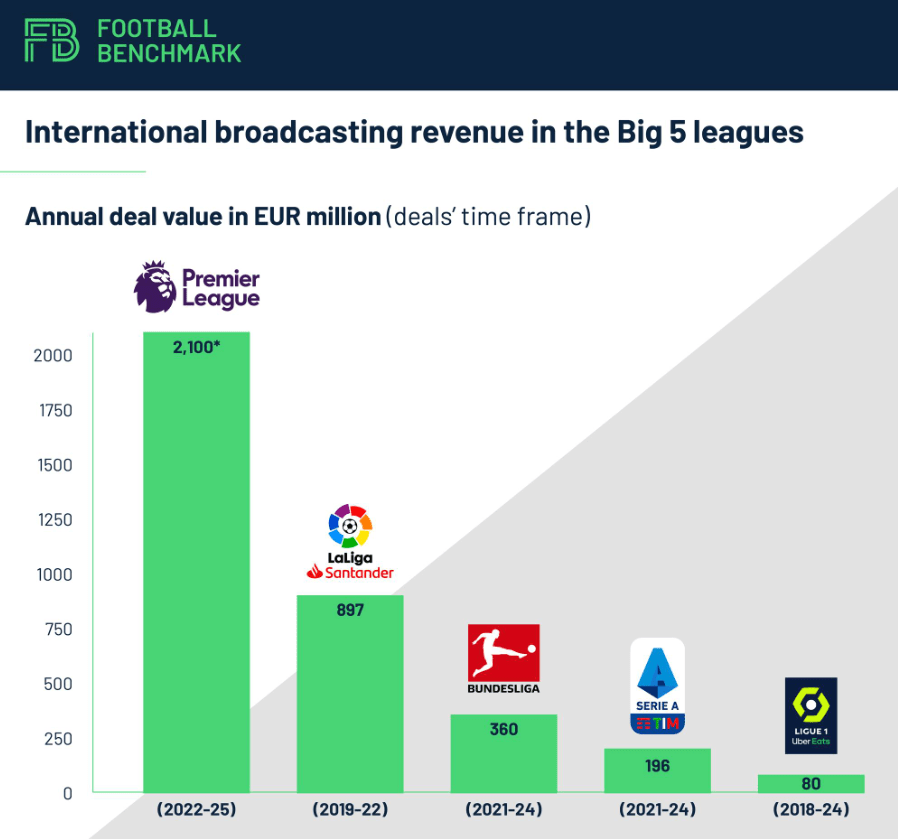
It is easy to take the Premier League’s international broadcast arrangements for granted, however the League has worked hard to reach its level of success in this area. English teams were once banned from European competitions, playing in dilapidated stadiums and massively undercapitalised. Over the years media production has allowed the competition to leverage its stories and increase international engagement. In today’s age of social media the Premier League is producing more content then ever and the costs of production are as low as they have ever been. Is the A-League producing enough content to sell its stories?
- The language barrier is actually an opportunity
Australians may be surprised to learn Premier League supremacy is not assured. The La Liga is in fact the most watched league in many parts of the world, particularly in South America where it leverages a Spanish Language advantage. Recognising this the Premier League generates a range of foreign language content including French and Arabic. With today’s AI powered translation tools the A-League must ask, is there an opportunity in foreign language content and can it offer a point of difference against other similar Leagues in this space?
- The power of branding
Brands like Messi and Manchester United have legions of fans that follow them in all environments. The A-League may not be able to replicate the same level of success but it must ensure that is has a strong brand strategy which incorporate not just the development of its own name, but the strategic leveraging of other brands. Friendly matches have helped expose the A-League to millions of fans over the years. Big name signings have done the same. A cohesive long term strategy however can create sustained focused benefits in high profile markets with the target of greater bilateral player exchange, viewership or even sponsorships from specific geographies.
- Platforming naturally occurring stories
Australia’s mainstream media has never been more interested in the Premier League than since when Ange joined Tottenham. Similarly Son has provided valuable market traction for the Spurs and the League in Korea. The lesson here? The A-League needs to identify the stories it has which resonate with international markets, or where clearly identifiable, fly in players or coaches who will create such an impression. This season Central Coast’s Pacific Islander players posed a massive opportunity for the League to market to the Pacific, but one must ask, was enough done to maximise this? Outside of broadcast revenues or view metrics, these stories can offer unique opportunities. Thinking creatively, Dan Hall and Brian Kaltak could have bridged the A-League and Governments to deliver social initiatives and funding in a similar vein to how the NRL is seeking $600m to launch a team in PNG.
- Developing and exporting players
Outside of the big ‘destination leagues’ countries like the Croatia, Brazil and Uruguay have realised massive international revenues and benefits for their domestic leagues in the form of player transfers. The better the A-League is able to develop and market its players the more attention and revenues it will be able to secure for its clubs and its players.
Domestic Market Lessons for the A-League
Just as we can look to international leagues for lessons on international engagement, the A-League must also consider the lessons available on our shores here in Australia. To be able to sell a good product overseas, you must have a good product. Ensuring the A-League football and core business model is working is the most important thing, ahead of any international engagement.
One other important factor on Australia’s own shores to consider is the country’s own unique multiculturalism. Many of the potential international market segments the A-League would look to develop abroad are aligned with markets present on our own shores. If we take a look at the rapidly growing Australian-Indian community as one example, this could allow the APL to simultaneously engage a growing domestic market, and an AFC football market that loves to sign Australian players.
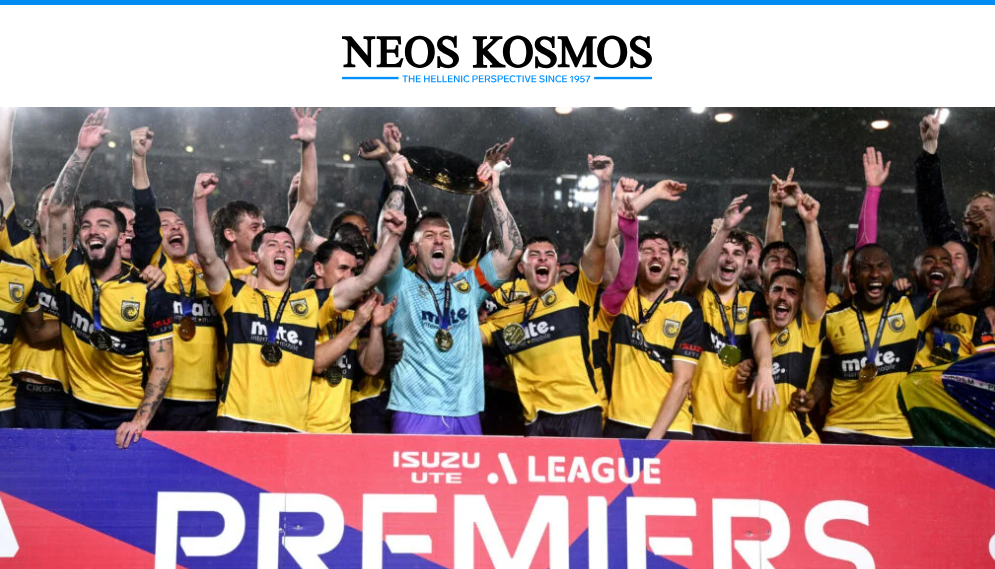
This also creates opportunities for the APL to engage with multi-lingual and multi-cultural media which has typically been a refuge for Australian football from a hostile mainstream media environment. Partnerships with SBS or even outlets that already cover the A-League like the Neos Kosmos, could help the APL realise international engagement, multicultural Australia, create new media exposure and offer cost effective high impact engagement levers.
So what can we propose for the A-League?
Now here’s the challenge…. Following this assessment of the A-League’s international presence and opportunities what should the competition do? I have two answers here. The cop out answer is I don’t know and the the APL need to work out what is feasible and what it’s priorities are. What is the non-cop out answer? In addition to a holistic review of their current data and strategy I suggest the APL considers a few low cost options next season to test the international waters more thoughtfully.
- Foreign Player Features
Telling the stories of foreign players already on our shores and broadcasting the packages overseas will have an instant impact. Brief interviews with Ibusuki, Arslan, Germain and others in their own language in the style of A-League all access would be an excellent way to cheaply engage foreign football fans not familiar with the league.
- Pilot Foreign Language Social Media Accounts
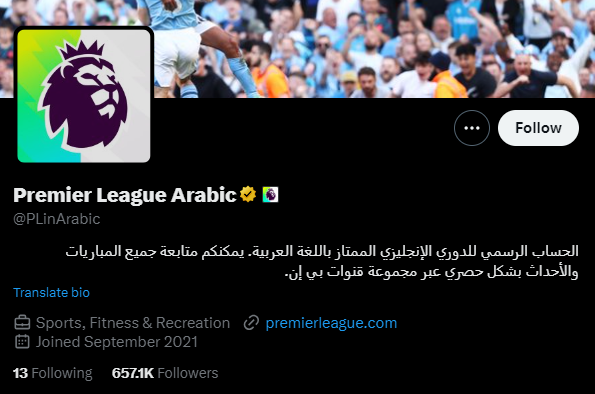
Even a single foreign language twitter account replicating existing image posts in foreign language would provide a low cost and highly informative way of engaging foreign markets. An Arabic language account in particular would engage Arab speaking Australians as well as other football fans from other AFC countries, many of whom play against A-League clubs or have signed Australian players.
- A-League Grand Final Overseas Event
The competition should look to host an overseas viewing party for the competition’s Grand Final. The event should invite A-League alumni present in the country as well as key local football people and potential sponsors it wishes to make an impression on. An event in India specifically would be appropriate. The Indian Super League currently has 12 Australian players and the APL can align itself with government relationship initiatives, as well as the large growing Indian Diaspora at the event.
- Survey International Broadcasters
The APL should survey its international broadcasters to understand how many viewers the A-League is attracting globally, the nature of the foreign broadcast arrangements and identify any obvious gaps. This could help align presentation of the league, identify interested markets, or even result in a chance in product strategy.
A final note
None of this is to say that the A-League should look to become the largest football league in the world, but rather to bring into question the competition’s current international marketing strategy. Just a small improvement in international engagement could have a material impact to the revenues and prestige of the League and until now I feel this has been somewhat ignored or not holistically considered.
Football fans in Australia have constantly struggled to bring the World Game into Australia’s national consciousness, but it’s time administrators realised that bringing the A-League to the international football consciousness is also a worthy cause.


 The Beautiful Game