

There is one thing you can count on each A-League offseason, and that is the fact that it will go on for far longer than is appropriate. Bored and directionless fans are already engaging in unstructured A-League adjacent conversations, and many more are bound to completely take a break from the League as their attention turns to other domestic sports and other international football.
Not only should this not be the case, but tragically this disengagement is also somewhat present during the season! Unlike its NRL and AFL counterparts, the A-League does not enjoy a fruits of a well-capitalised diverse media that can craft yearlong narratives and focus fan attention. However factors in today’s media age mean this does not have to be the case and the APL can realise massive upside by adequately addressing this media gap.
The Media Network Effect
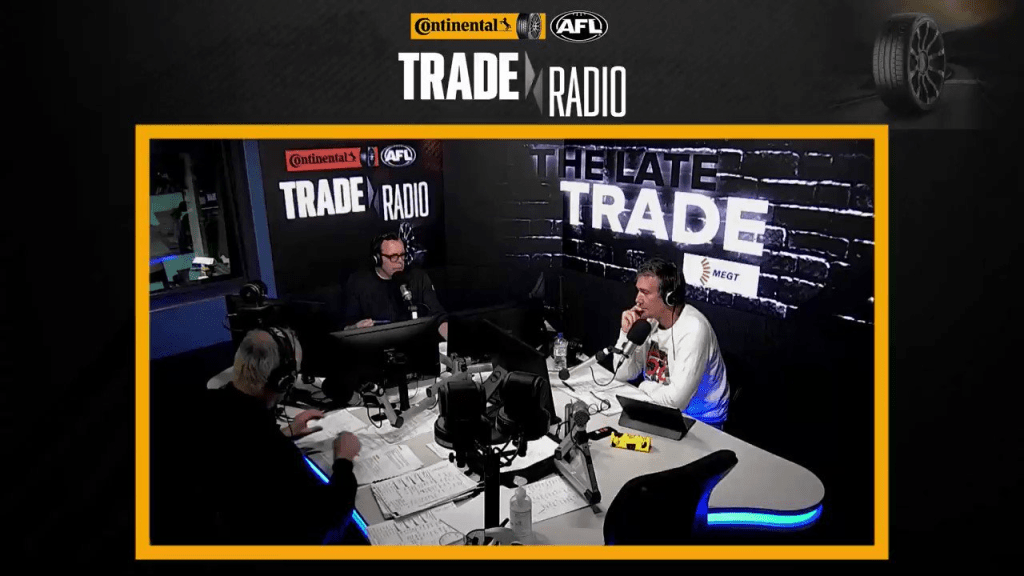
The sport industry has typically relied on the external media outlets to tell its stories. AFL and NRL dominated news programming, enjoyed league themed variety shows, analysis panel shows, owned the back page of newspapers, and created endless conversation on talk back radio. But beyond the sheer volume of ratings and reach this media provided it also created a powerful network effect. What does this network effect mean? Let’s consider the following dynamic. Talk back radio would discuss the back page headlines, the newspapers would then report on what was said on the radio, and this cycle would continue creating content for and about itself.

Football stories are typically one and done
Football is lacking this network effect and as such subject to simple direct story telling that starts and ends after a story is told once. Let’s take the example of prominent Australian football journalist Vince Rugari. When Rugari published an article this article is shared through his own twitter page and his publishers pages. If the story is compelling or successful he may write a follow up on the same media channels. Not let’s contrast this with an AFL story. Big stories have a presence on their original outlets and then are discussed on television (via shows like Footy Classified) on talk back radio (like 3AW) and offer multiple opportunities for the original journalist themselves to come onto shows and discuss the story, which simultaneously lifts the profile of the story, sport and journalist. For football a game is played, reported on and never heard about again, but in AFL and NRL a single story is duplicated into multiple stories from multiple perspectives on multiple platforms.

Where is the Football multiplier effect?
This lack of this media network effect is due to a number of factors. Football’s main broadcaster (Paramount) lacks the diverse media interests of Nine, Seven and News Limited groups. These alternative mainstream outlets arguably have reasons to ignore football themselves. Above all though, football lacks a platform to bring its large and diverse media footprint together to interact. Football is already reported by many outlets (Optus, Stan, Paramount) and it generates large ratings (Matildas matches being the prime example) however the cross collaboration is limited. For example, although Craig Foster works for Nine, we don’t see him frequently discussing the A-League. When SBS released their feature documentary on Western Sydney Wanderers, we did not see many current A-League broadcasters feature in the series.
Industry led media
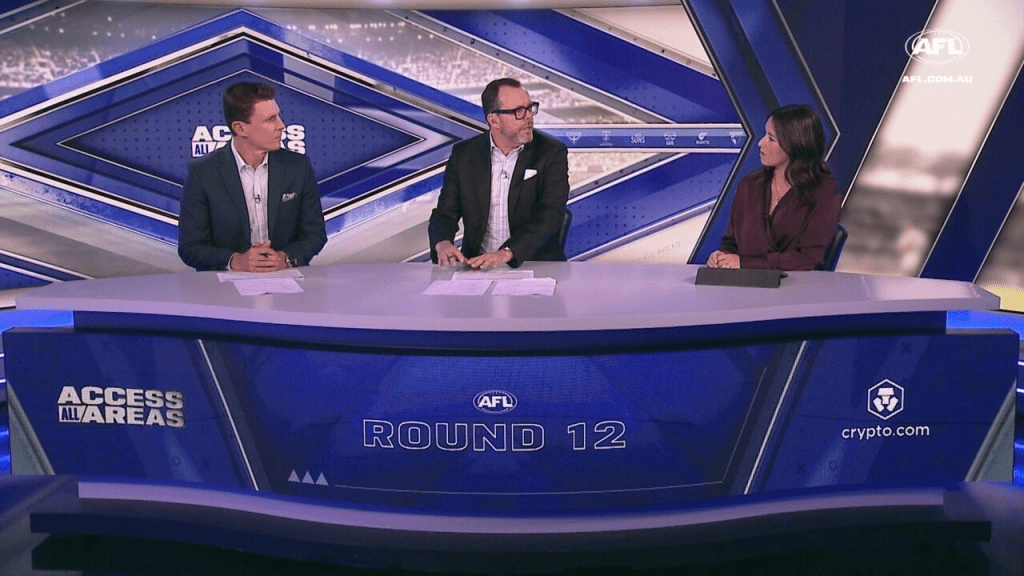
With the rise of new media, the sports industry itself is taking the lead in content creation and narrative formation. The AFL and NRL have a suite a daily podcasts and content creators they use to influence the larger narratives and platform journalists and stories from other media outlets. Unlike the APL’s previous failed attempt at industry led media (KeepUp) these AFL and NRL platforms champion and directly tie back to their own leagues and create content which improves existing fan engagement and maximises the network effect by cross-pollinating other outlets in the existing media ecosystem.
Green shoots
The only remnants of KeepUp are in fact content products that mimic this dynamic and offer real examples of further opportunity in this space. A-League All Access leverages existing player and match stories and offers an alternative perspective on existing match content. The award winning DubZone programming has provided a platform for players, fans and broadcasters to delve into ALW content. Even A-League Alumni content branding has helped expand the story telling of A-League personnel and provided upside access to higher profile brands which elevate League perception and conversation.
So if these greenshoots already exist, where does the next opportunity for the A-League lie?

A daily multi-platform program
In the offseason the APL must look to creating a daily multi-platform program with the specific goal of enriching the A-League media ecosystem. There must be an effort to specifically:
- Direct fan engagement even during the the offseason
- Foster the existing media network by commenting on external outlets
- Multiply content outputs by platforming different perspectives
- Elevating existing media personalities by giving them a new platform
- Provide a new avenue of engagement for A-League fans
How these objectives can be achieved
A 22 minute back daily panel show would meet these objectives and provide huge upside for the A-League.
Similar to other daily sports shows the program content should comprise
- Reporting and discussion of the day’s major A-League headlines and stories
- A rotating cast of hosts to ensure unique perspectives
- Regular panel spots for football journalists and media contributors
- Interviews of club and league personnel
The show should directly create many formats of content
- Video Content of full episodes (primarily for YouTube and Paramount)
- Video Content clips from episodes (primarily for social media, TikTok)
- Audio Content for podcast platforms
The show would also feed potential content in the media ecosystem
- Written summaries of interesting discussions for A-League website
- Written follow ups by other media outlets and bloggers
- Commentary stock for other podcasts and creators
Such a program could help elevate the football media ecosystem by platforming emerging talent (including those of the MAFFS podcast), cross-promote existing talent (commentators on SEN’s The Global Game) and overall help identify and foster strong potential media brands which can hugely help the League visibility, just as Les Murray once did.
Such a program would also allow for the natural development of in demand content by offering a platform to trial different segments. These could take the form of regular tactical analysis from an expert, or themed episodes that occur periodically.
Such a program offers a low cost and high impact opportunity for the league as demonstrated by a number of existing independent productions which follow the same strategy. The League enjoyed the added benefit of a content starved captive market, and existing commercial relationships which would be enhanced by such an content production.
What could this have looked like in the past week?
Looking at the past week of content and considering the talent on offer we’ve mocked up an example of what the running sheet of such a program could look like:
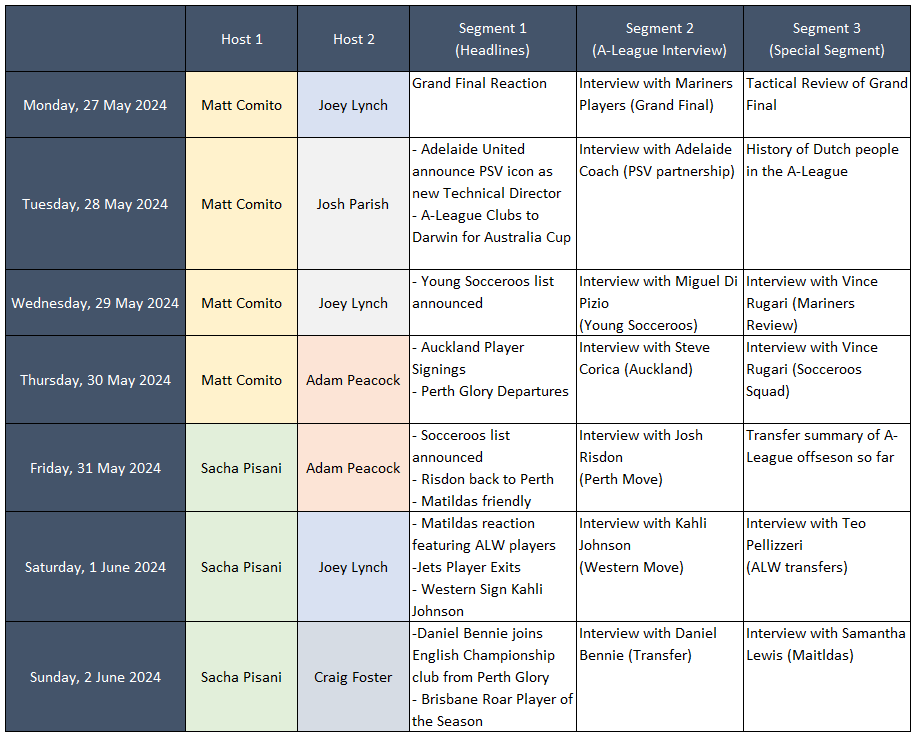
During the season the more regular content could provide adequate fodder and help people establish listening and viewing routines.

There is more than enough content being produced and talent available to leverage. Not only does the APL currently employ existing media people who would be able to host and produce the content but another 25 independent A-League podcasts are currently in production and hundreds of media contributors available to provide guest content. Content wise, even during this offseason over 20 stories have been published on the A-League website this week which is more than adequate to provide meaningful discussion.
Whereas previous iterations of similar content have been too infrequent (A-Leagues Podcast) or felt too stale (Round Ball Rules) to cut through to audiences, a more considerate and frequent production properly featuring on A-League platforms, will address key A-League media issues and can be done in a financially responsible, high impact way as soon as next season.


 The Beautiful Game